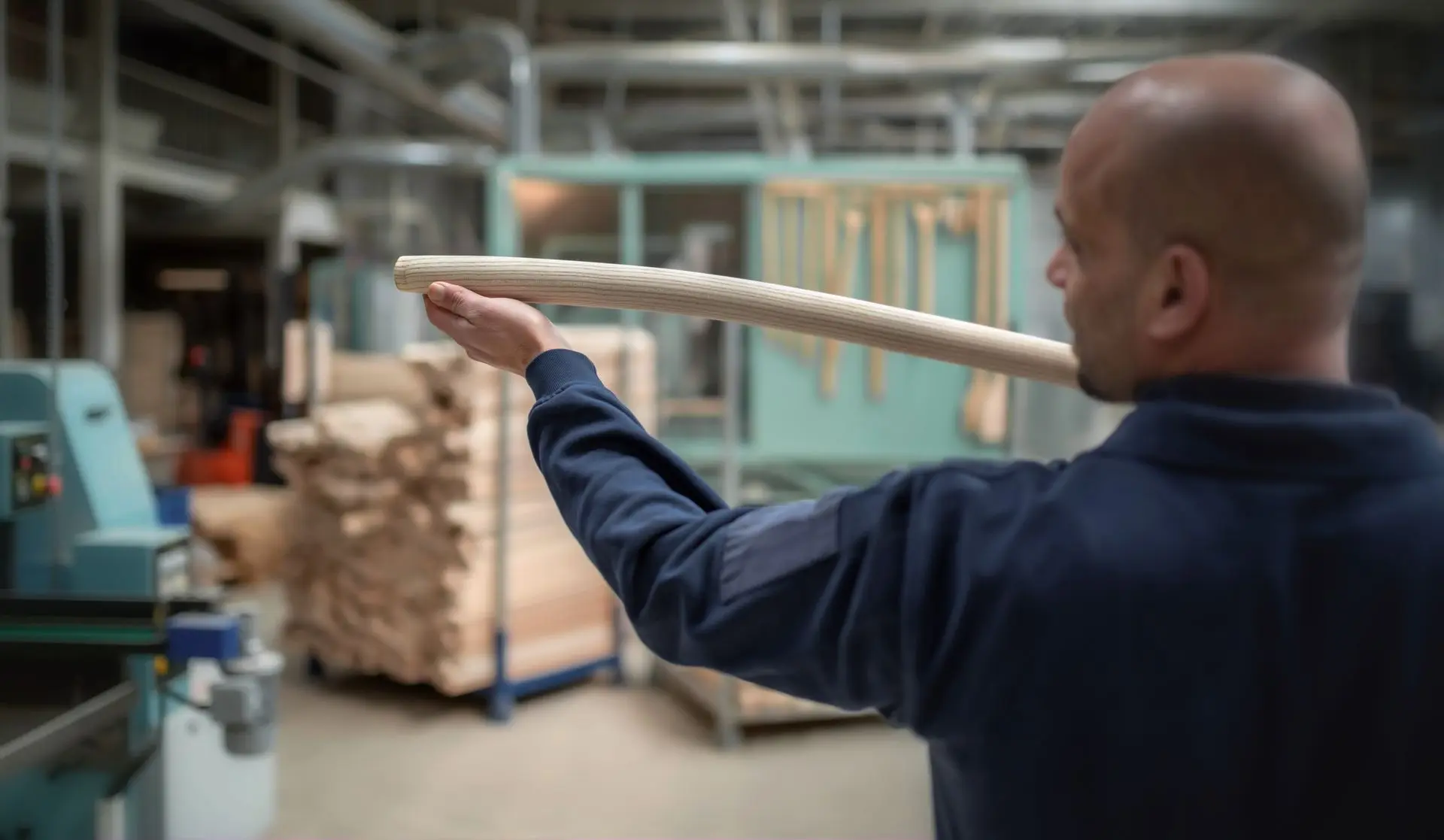
High-quality finished Atlas handles, with the right components from the best manufacturers.
Through co-branding, Atlas Tools delivers the best of both worlds.
That is why professionals enjoy working with Atlas tools.
Read more about Atlas co-branding or see right away which top brands Atlas works with:
Atlas co-branding
Atlas history in brief
Atlas traces its origins to 1814, when the Kooijmans family made baskets from willow twigs. Due to the growing demand for tool handles, it was decided around 1922 to make handles from willow wood in addition to baskets. Years later, the Atlas brand received its recognizable logo, from which the current logo originated (see also: same strength, new face). Atlas grew into the specialist in wooden tool handles.
Over time, Atlas handles were increasingly combined with the best components from other manufacturers. Think, for example, of forks and shovels from Offner, dutch hoes and draw hoes from De Wit, leaf rakes from Fiskars, and poly rakes from Jost.
By combining Atlas handles with all kinds of professional tools, an ever-broader assortment emerged that is known among professionals in various industries.

1960

2000

2025
Why co-branding?
Manufacturers often focus on one brand, but not always entirely on their specialty. By combining our specialty – producing handles – with the specialty of other manufacturers, we choose the best of two worlds. In this way, Atlas Tools offers durable, high-quality tools that professionals rely on. Always with an eye for craftsmanship and quality first.
Want to know more about our craftsmanship? Then read on at 'About Atlas handles'
Partner brands
Atlas handles are combined with several top brands for different types of professional tools. These include, for example, spades, shovels, forks, rakes, draw hoes, dutch hoes, and leaf rakes. We highlight a few brands:





Atlas Diamant
Co-branding with Atlas Diamant
Atlas Diamant is a sub-brand that, like Atlas, is made from high-quality materials and aimed at professional users. The assortment consists of spades, shovels, and scoops with an extra hardened blade that is fully or partially polished.
One of the most commonly used Atlas Diamant tools is the Drenthe model 1/4 000 digging shovel with step:
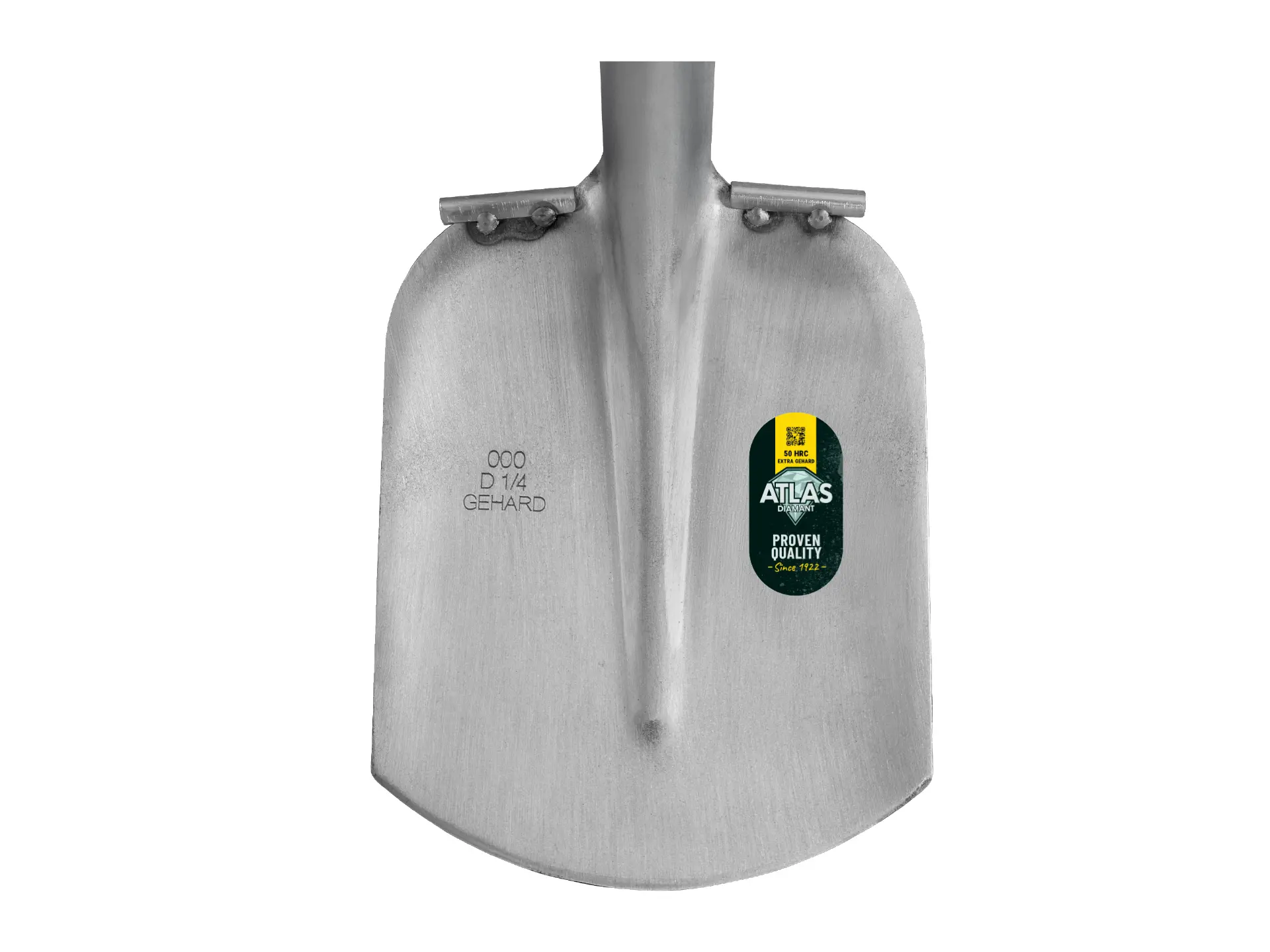
Polished blade
Penetrates the soil smoothly, has less material buildup, and releases soil from the blade more easily
Extra hardened
Forged boron steel, has a longer service life, and is suitable for intensive use
Ergonomic step
Provides better grip, easier digging, and protects footwear from damage
Good to know
Shovels and scoops have a size designation such as 1/4 000, the so-called stamp. This stamp stands for socket position and blade width. Read all about it in ‘Explanation of shovel and scoop stamp sizes’
Vakblad De Hovenier recently wrote an article about the co-branding between Atlas Tools and Austria’s Offner. It explains how the collaboration between the two family businesses began more than 30 years ago. Today, this co-branding still results in high-quality forks, shovels, and rakes for the professional market.
Read the article on De Hovenier’s website: 'Two family businesses with one shared philosophy'
About Atlas handles
Always with an eye for craftsmanship and quality first.
That is why Atlas handles have been a leading name in the professional tools market for many years. The knowledge of handle making has been passed down from generation to generation and perfected.
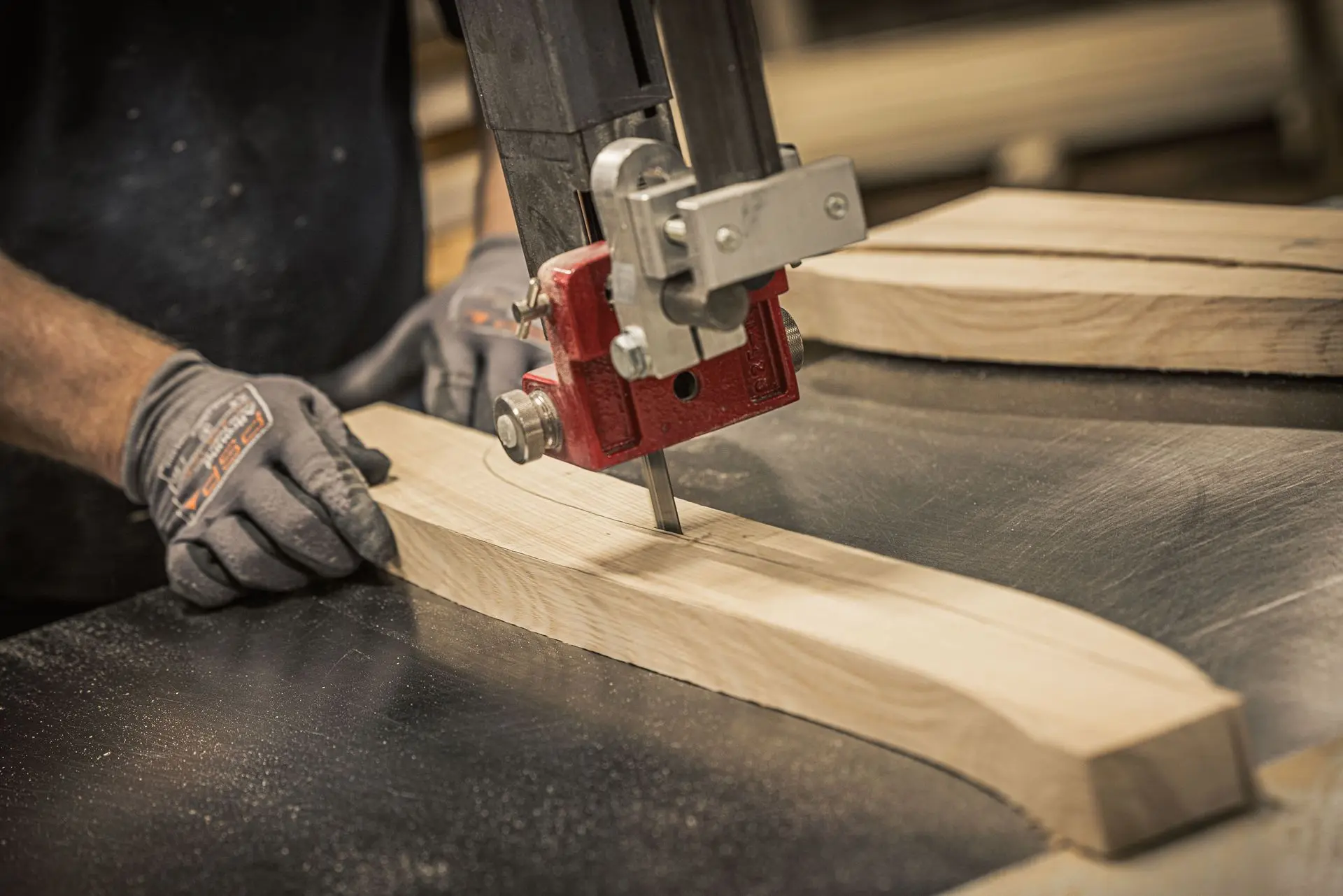
Today, Atlas handles are made using a balanced combination of traditional craftsmanship and an automated production process. Repetitive work is carried out by robotic arms and machines, allowing the production team to focus entirely on detailed work and quality control.
What makes an Atlas handle unique?
To find out, we explain more about one of the most popular products: the Atlas shovel handle. A number of specific characteristics provide the quality that many professionals know, namely:
Selected wood
Atlas shovel handles are made from ash wood. Ash wood is tough, shock-absorbing, and strong. Atlas uses only straight ash lower trunks containing the best wood. Crooked trunks or wood with knots have an irregular grain and are less strong, resulting in a weaker handle. By selecting carefully and using high-quality wood, we can make strong Atlas handles that last a long time.
Drying process
The ash wood undergoes two drying processes: during the first drying process, sawn ash wood planks are air-dried. During the second process, the ash wood is kiln-dried under computer control in a climate chamber. Because of this re-drying, the handle does not shrink, the tool remains firmly attached to the handle, and the through-mount T-grip can be pressed onto the handle without glue or a staple.
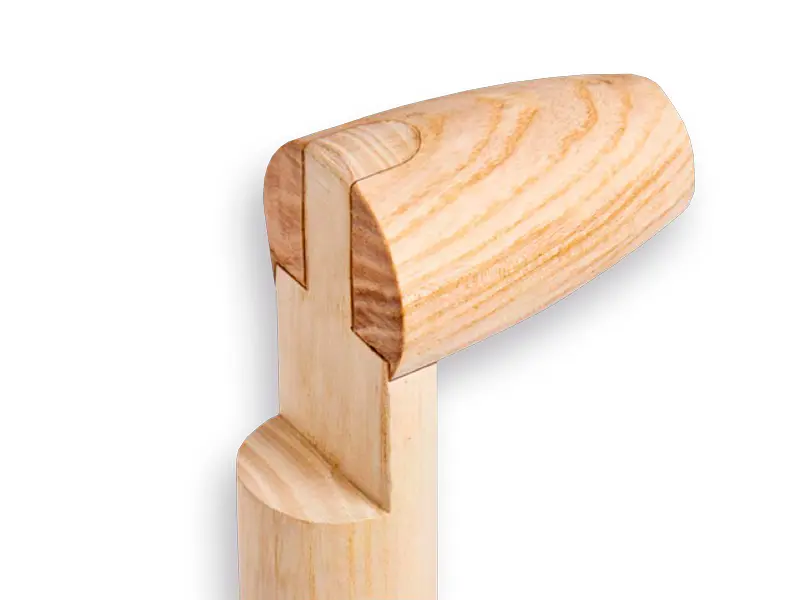
What is a through-mount T-grip?
The grip of an Atlas shovel handle is machine-pressed onto the handle. It is then neatly rounded off and sanded so that it sits comfortably in the hand. Because the ash wood is perfectly re-dried, no glue, screw, nail, or staple is needed to secure the grip. The through-mount T-grip remains neatly in place on the shovel handle by itself.
How does an Atlas shovel handle get its bend?
The bend in a shovel handle is ergonomically necessary for the correct working height and angle relative to the ground. Atlas shovel handles are bent in boiling water. The hot water softens the ash wood so it can be bent. During bending, the wood grain or fiber follows the shape of the handle, preventing the grain from running out of the handle. Grain that runs out is weaker. The bending process makes an Atlas shovel handle extremely strong. In addition, every shovel handle is checked during bending to ensure it is bent in the correct direction.
Waxing with Carnauba
Finally, an Atlas shovel handle is waxed with plant-based Carnauba. This allows the wood to breathe, prevents it from absorbing water or dirt, and preserves its beautiful light color. Waxing provides a longer service life and a pleasantly smooth handle, helping to prevent blisters. In addition, waxing handles with plant-based wax is better for the environment than using varnish or paraffin.
View Atlas handles