
How Atlas stays up to date
To continue meeting the demand of professionals, new Atlas tools are regularly added to the Atlas Tools range.
New products in the
Atlas range
We highlight a number of tools for you. You can find all new products here:
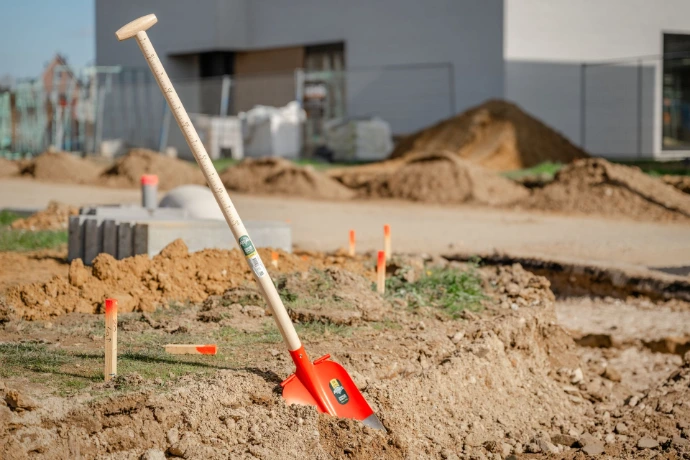
Which products are new in the Atlas Tools range?
Recently, the following new products have been added, among others:
New Levelling Rake
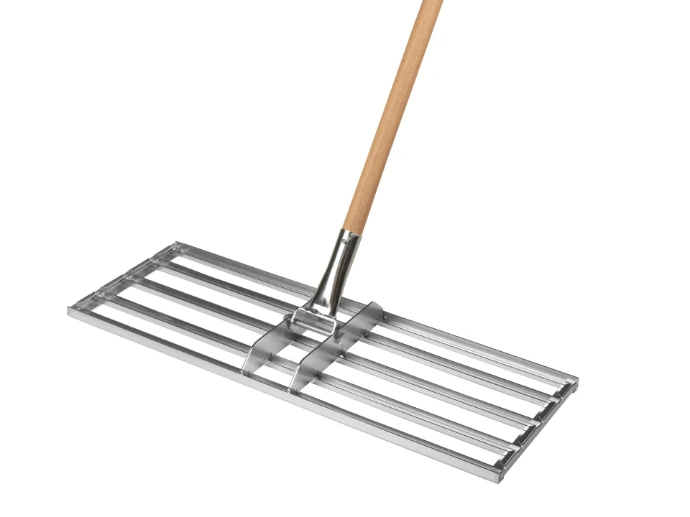
Complete with a thick hardwood Tauari handle, length 150 cm. The handle has a comfortably smooth finish and is waxed with Carnauba wax.
What do you use a levelling rake for?
For paving work, the sand bed can first be levelled with the levelling rake before screeding. The sand bed is then already largely level. In addition, most stones and other debris are removed from the top layer, so they do not interfere during screeding. The Atlas levelling rake is also used for levelling stabilisé before it is compacted with a vibrating plate.
New Cable Shovels
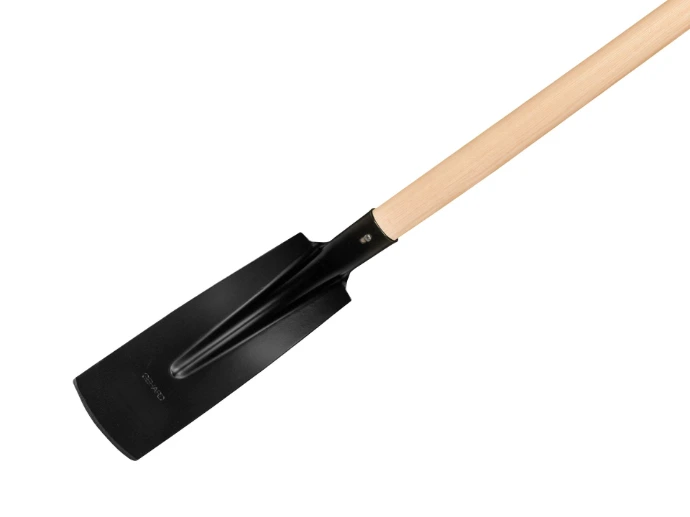
Available with a bent shovel handle with through-mount T-grip or a bent shovel handle.
How do I know the socket angle of a shovel?
The socket is the handle connection that the handle of a shovel goes into. These straight cable shovels have a socket angle of 3/4 bent upward. When the blade lies flat on the ground or at the bottom of a dug trench, the handle points diagonally upward. Thanks to the highly bent socket angle, you can work easily and ergonomically with an Atlas cable shovel. A 3/4 bent socket is used when material needs to be scooped flat or deep.
You can measure the socket angle by laying the blade flat on the ground and measuring the distance between the surface and the underside of the socket. The different socket angles are:
3/4: the socket is bent upward by 70 mm, for example on scoop shovels and cable shovels; especially suitable for scooping
Want to know more about socket angle and the different models of shovels? Then read more here:
Socket angle and blade width
New Concrete Shovels
Different types of handles fit in a concrete shovel. Find out which one is best for you here:
Which handle fits in a concrete shovel?
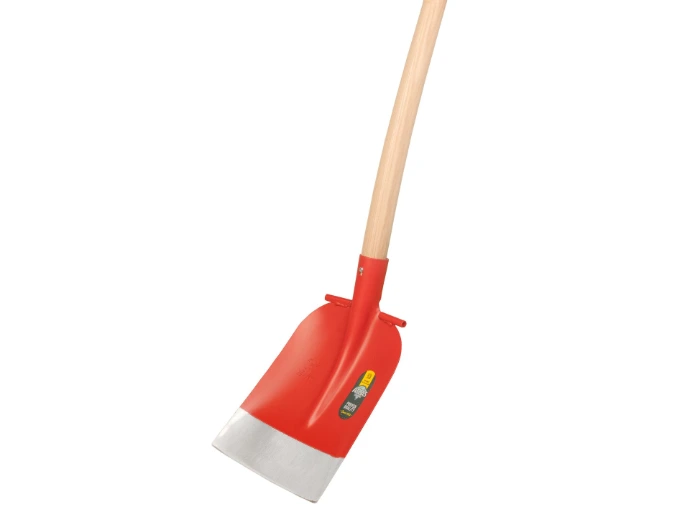
Available with different handles, such as a shovel handle, gooseneck shovel handle, or a shovel handle with scale.
What different concrete shovels are there?
Thanks to its straight front edge, a concrete shovel or Holsteiner shovel is ideal for shoveling away sand and soil flat, among other materials. A concrete shovel usually has blade size 0. The socket angle is often 1/2 bent upward, but 3/4 bent upward also occurs on specific models. Because it is often used for levelling, a concrete shovel is also called a levelling shovel. A very popular shovel in infrastructure, construction, among pavers, and landscapers.
Concrete shovels can roughly be divided into three types:
- Concrete shovel with straight front edge
- Concrete shovel with straight front edge and step
- Concrete shovel with rounded corners
Below we explain the main differences.
Which concrete shovel do I need?
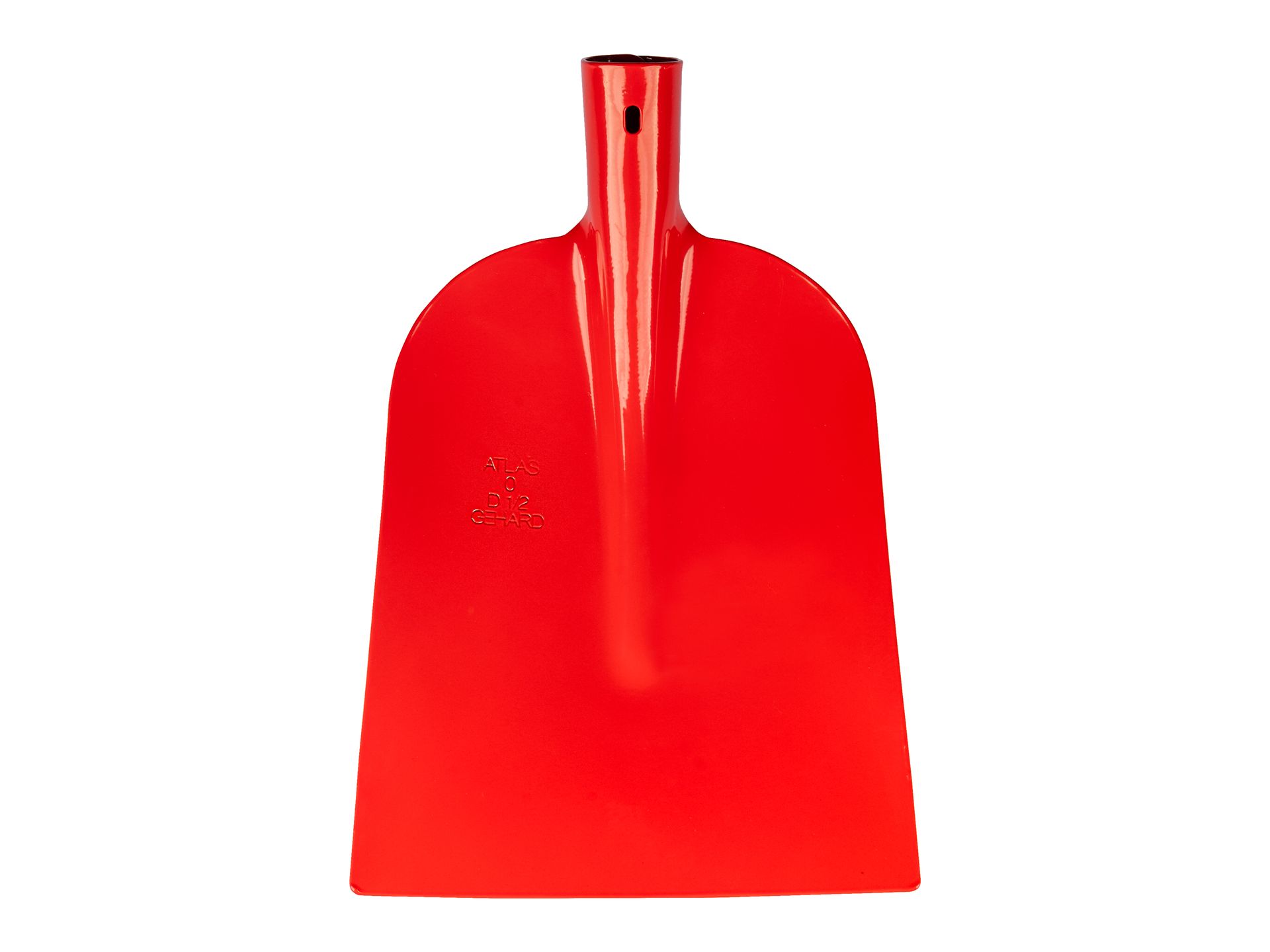
The most common model is a concrete shovel with a straight front edge and blade size 0. This concrete shovel often has a 1/2 bent socket, but is also available in 3/4 bent. Thanks to the straight front edge, this concrete shovel is ideal for levelling a sand bed or black soil. The concrete shovel is used upside down, pulling the straight blade square across the surface. The straight corners let you level tightly along edging, a stretcher course, or a raised edge. The highly bent socket makes it possible to scoop flat across the sand bed or trench.
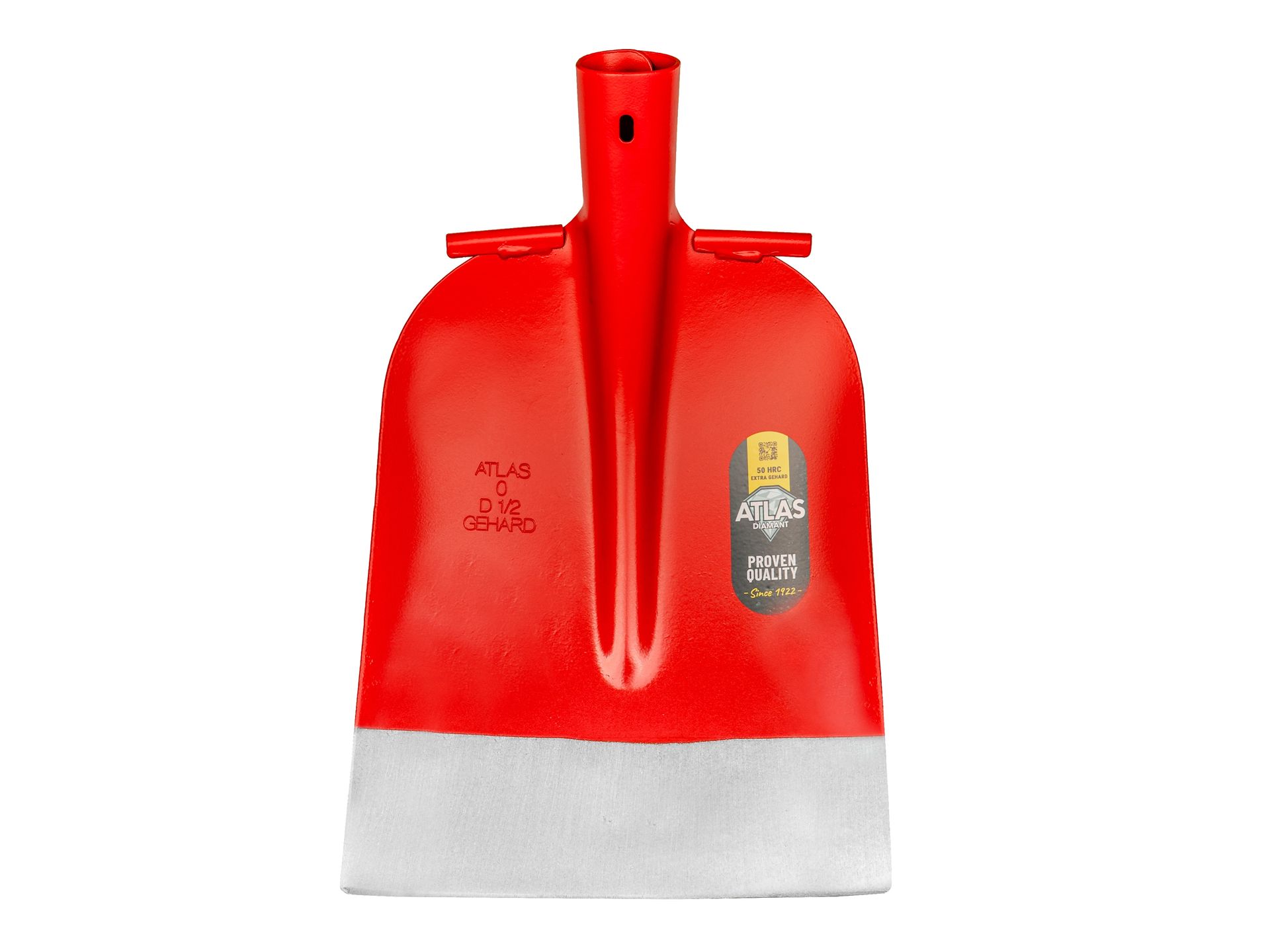
Like the other concrete shovels with a straight front edge, these models are ideal for levelling and scooping. A concrete shovel with step has a 1/2 bent socket angle and blade size 0. The red lacquered blade has a polished edge, which allows soil to release easily. In addition, the top of the blade has a round tread. This tread provides good grip and prevents footwear from being damaged. This makes this concrete shovel more suitable for cutting into soil as well.
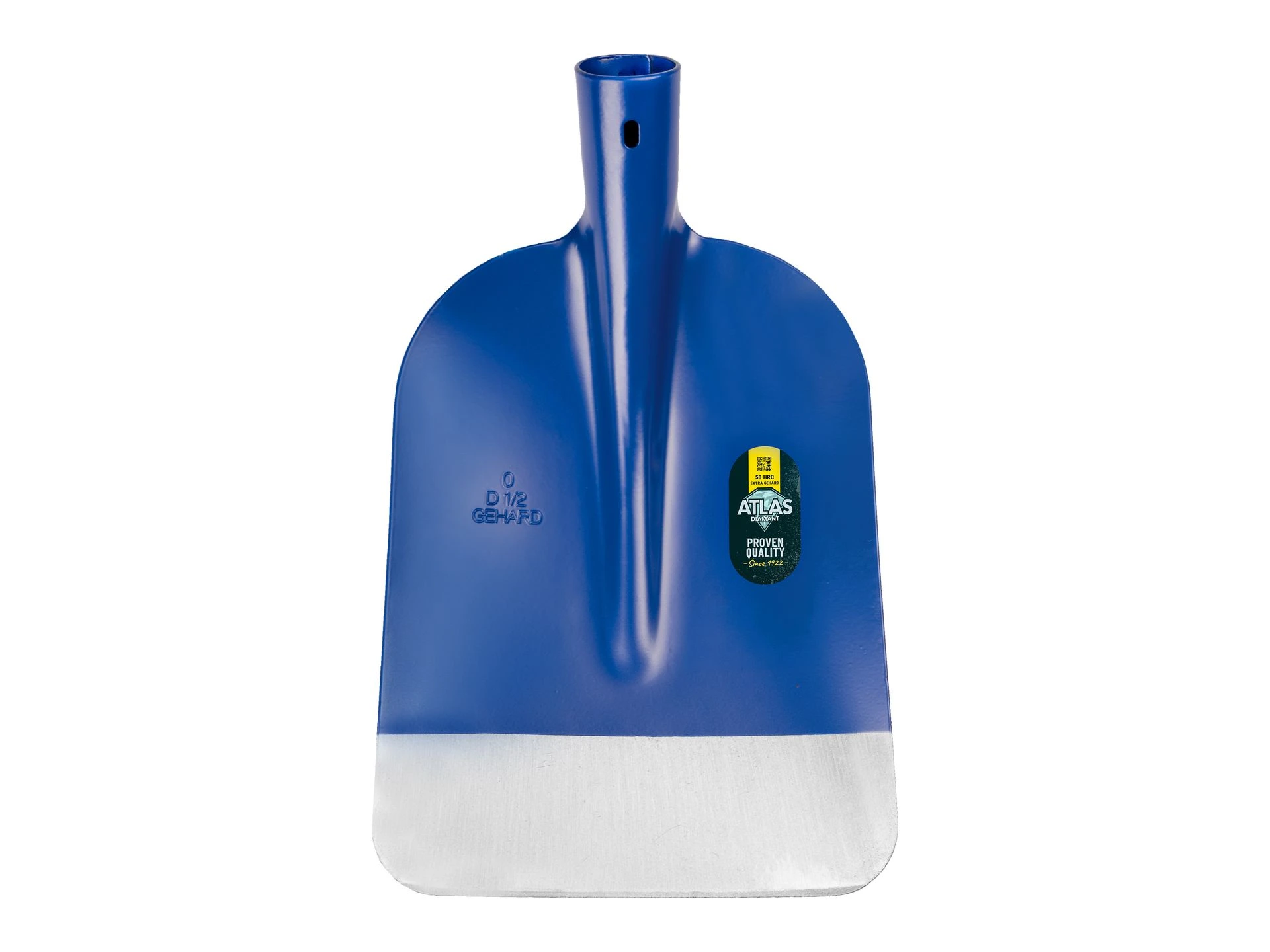
Concrete shovel with rounded corners
Because of the highly bent socket and the wide blade, this concrete shovel is also ideal for scooping and levelling. Thanks to the rounded corners, however, this concrete shovel makes it much easier to scoop material out of a wheelbarrow, trailer, or big bag. Where a fully straight concrete shovel can catch on the corner points, a rounded concrete shovel does not have this problem. The blue lacquered blade has a polished edge, which allows soil and sand to release easily and stick less.
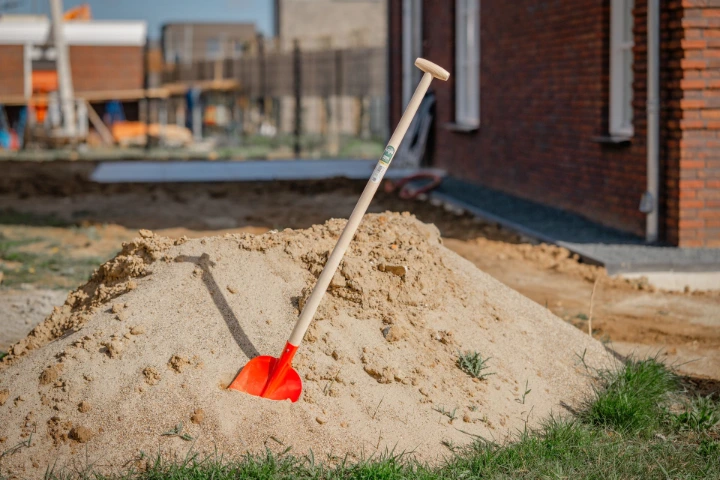
Which handle fits in a concrete shovel?
Different types of handles fit in a concrete shovel. Which handle you choose depends on the type of work you do most often, your height, and of course what you personally find most comfortable to work with. The important thing is to choose a handle that feels comfortable in your hands and allows you to work ergonomically.
Common handles for a concrete shovel are:
Bent shovel handle
A common Atlas handle with a strong through-mount T-grip (without glue, screw, or staple). Bent in boiling water so that the grain follows the curve neatly. Comfortably smooth and waxed with plant-based Carnauba wax.
Double-bent gooseneck shovel handle
Gooseneck shovel handles have a thickened lower end of the handle. The thickened lower end makes the handle extra strong and ensures a firm grip in the hand. The double-bent S-shape allows the handle to extend nicely high while the concrete shovel lies flat on the sand.
Atlas shovel handle with scale
A shovel handle with scale is equipped with centimeter markings, with a mark at every 5 and 10 centimeters. This allows users to quickly and easily measure depth or distance when placing concrete curbs, during layout work, and excavation work.
Bent shovel handle
Because of their length and bent shape, shovel handles are ideal for digging, scooping, and levelling work. They are available from 130 cm up to 200 cm long. Atlas shovel handles are popular with infrastructure companies, groundworkers, pavers, and landscapers.