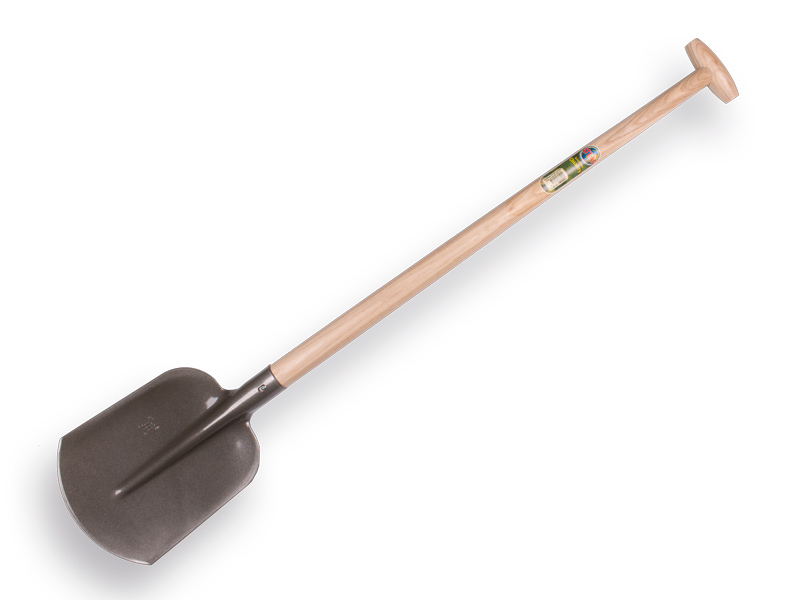
ATLAS digging shovel Drents model with socket position 1/4 bent and blade size 000, complete with a bent ATLAS shovel handle in length 100 cm, fitted with a through-mount T-grip.
The ATLAS shovel handle is made from ash tree roots, which contain the best wood. Ash wood is tough, shock-absorbing, and strong. The ash wood has been computer-controlled kiln-dried in a climate chamber. As a result, the handle does not shrink, tools stay firmly fixed to the handle, and the through-mount T-grip can be pressed onto the handle without glue or a staple.
ATLAS shovel handles are bent in boiling water. This causes the wood grain or fiber in the handle to bend along with it, preventing the grain from running out of the handle. The bending process makes the handle extremely strong. In addition, the ATLAS handle is waxed with the plant-based Carnauba wax, which ensures a longer service life and a pleasantly smooth handle, helping prevent blisters.
Explanation of socket position
The socket position indicates the angle relative to the blade. The higher the socket position, the more bent the socket is. This determines whether a shovel or digging shovel is designed for digging or scooping. The socket position is measured from the ground to the socket when the blade lies flat on the ground.
Straight: the handle is almost straight on the blade
1/4: the socket is bent 35 mm, for example for digging shovels
1/2: the socket is bent 55 mm, for example for scoop shovels and concrete shovels
3/4: the socket is bent 70 cm, for example for scoop shovels and deep digging shovels
Explanation of blade width
In the past, there were blade widths that ranged from number 2 to 0, with 2 being the largest. Over time, the blades had to become smaller due to working conditions, and smaller sizes were introduced.
The blade sizes for shovels and digging shovels are from large to small: 2 – 1 – 0 – 00 – 000
Click here for more information about models,
socket position, blade width & socket positions