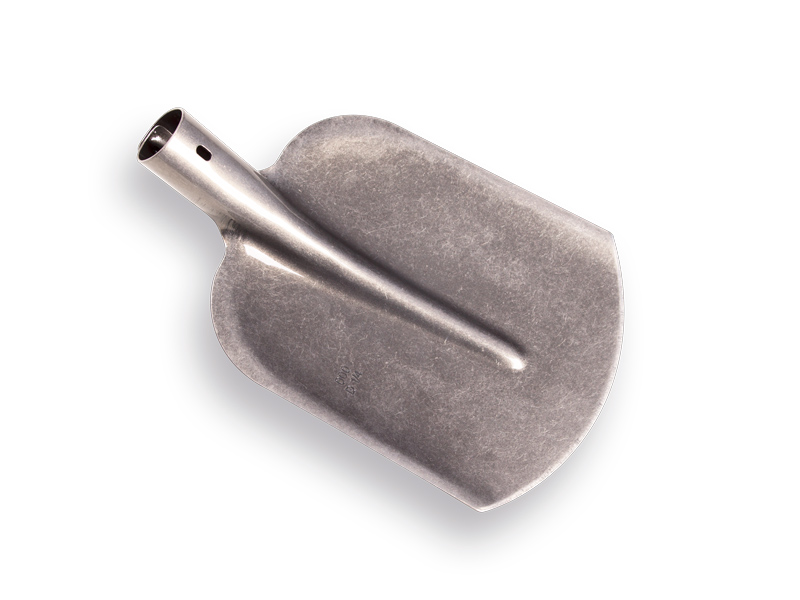
ATLAS digging shovel, Drents model with 1/4 socket bend and blade size 000, supplied without handle.
Explanation of socket bend
The socket bend indicates the angle relative to the blade. The higher the socket bend, the more angled the socket is. This determines whether a shovel or digging shovel is designed for digging or scooping. The socket bend is measured from the ground to the socket when the blade lies flat on the ground.
Straight: the handle is almost straight to the blade
1/4: the socket is bent up 35 mm, for example for digging shovels
1/2: the socket is bent up 55 mm, for example for scoop shovels and concrete shovels
3/4: the socket is bent up 70cm, for example for scoop shovels and deep shovels
Explanation of blade width
In the past, there were blade widths ranging from number 2 down to 0, with 2 being the largest. Over time, the blades had to become smaller due to working conditions, and smaller sizes were introduced.
The blade sizes for shovels and digging shovels are, from large to small: 2 – 1 – 0 – 00 – 000
Click here for more information about models,
insertion, blade width & socket bends